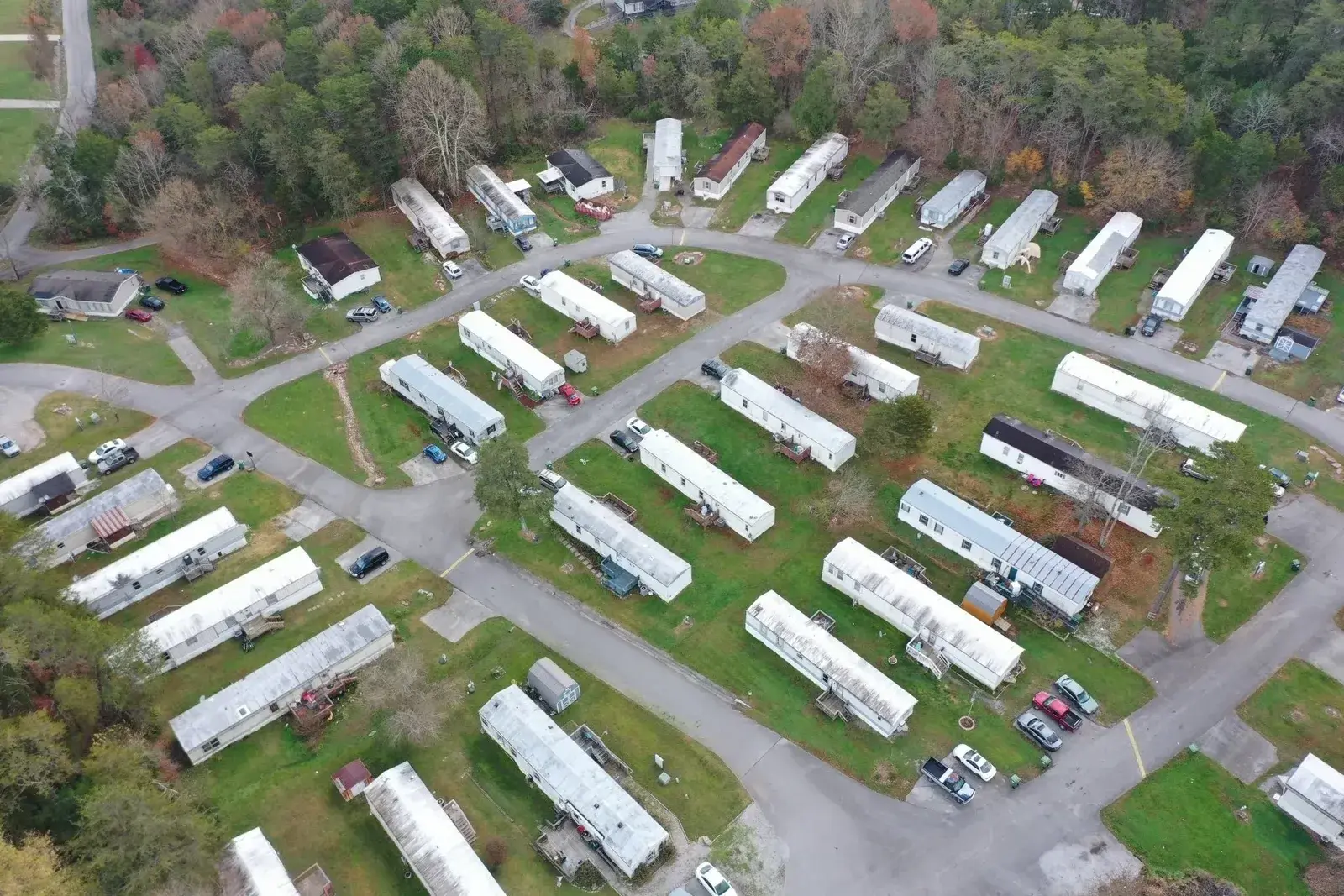
Mobile home park financing is available through five primary channels: bridge loans, conventional bank debt, agency loans (Fannie Mae/Freddie Mac), CMBS conduit loans, and seller financing. The right option depends on the park's current condition, your timeline, and whether the property needs repositioning before it qualifies for permanent debt. Smaller balance deals, particularly parks purchased in the $500K to $2M range, are often financed with bridge loans due to limited lender appetite at that size and the reality that many of these parks lack the quality books and records that conventional and agency lenders require.
At Requity, we see this firsthand. We originate bridge loans on mobile home parks and we own and operate manufactured housing communities ourselves. That dual perspective, lender and operator, shapes everything in this guide. We are not writing from a textbook. We are writing from 70+ originated loans and 32+ property acquisitions.
What Is Mobile Home Park Financing?
Mobile home park financing refers to any debt product used to acquire, refinance, or reposition a manufactured housing community (MHC). Unlike single-family or standard multifamily lending, MHP loans are underwritten based on pad rent income, occupancy, infrastructure condition, and the split between tenant-owned homes (TOH) and park-owned homes (POH).
This distinction matters because most traditional lenders do not have a dedicated MHP lending program. Community banks may finance a park if the borrower has a strong relationship, but the underwriting criteria vary widely. Agency lenders (Fannie Mae and Freddie Mac) have formal MHC programs but with strict property condition and composition requirements. CMBS conduit lenders will finance stabilized parks but underwrite heavily toward debt yield. Specialized bridge lenders, including private lenders like Requity Lending, fill the gap for value-add acquisitions and parks that do not yet meet conventional or agency standards.
The MHP financing market has grown significantly as institutional capital has moved into the manufactured housing space, driving up demand for both acquisition and value-add financing.
Types of Mobile Home Park Loans Compared
There is no single best financing option for every mobile home park. The right structure depends on the park's condition, your business plan, and your timeline.
| Feature | Bridge Loan | Bank / Credit Union | Agency (Fannie/Freddie) | CMBS Conduit | Seller Financing |
|---|---|---|---|---|---|
| Loan Amount | $100K - $5M+ | $500K - $10M+ | $1M+ minimum | $3M+ minimum | Negotiable |
| Term | 12 - 36 months | 5 - 25 years | Up to 30 years | 5, 7, or 10 years | 3 - 10 years typical |
| Interest Rate | 9% - 12%+ | 6% - 8% | 5% - 7% (varies with index) | 5.5% - 7% | Negotiable (often 5% - 8%) |
| Recourse | Recourse or limited | Recourse (typically) | Non-recourse | Non-recourse (with carve-outs) | Varies |
| Speed to Close | 7 - 21 days | 45 - 90 days | 60 - 90 days | 60 - 120 days | Varies |
| Down Payment | 10% - 35% | 20% - 30% | 20% - 25% | 25%+ | 0% - 30% |
| Underwriting Focus | Asset value, business plan, exit strategy | Lot-based income and expenses | Lot-based income, property condition, TOH % | Debt yield, DSCR, LTV | Negotiable |
| Best For | Value-add, low occupancy, infrastructure needs | Stabilized parks with strong lot rent income | Institutional-quality stabilized parks | Stabilized parks in all market tiers | Off-market deals, motivated sellers |
| Key Limitation | Higher cost, shorter term | Most will not finance POH income | Strict property condition and infrastructure requirements | Prepayment penalties (defeasance or yield maintenance) | Depends on seller willingness |
A Critical Misconception: Lot Income vs. POH Income
One of the biggest misunderstandings newer borrowers run into is how banks, agency lenders, and CMBS lenders treat the park-owned home (POH) component of a mobile home park.
Most banks, especially the national ones, underwrite exclusively on lot-based income and lot-based expenses. They value the land and the pad rent stream. The revenue generated by park-owned homes (rent collected on homes the park owns) is largely excluded from underwriting because it carries higher operating costs, turnover risk, and depreciation. A minority of banks will include POH income, but this is the exception, not the rule.
Agency lenders (Fannie Mae and Freddie Mac) take a similar approach. They want to see that at least 65% to 75% of the community consists of tenant-owned homes. Parks that are heavily weighted toward POH will not qualify for agency financing regardless of how much revenue the homes generate.
For borrowers who own a park with a significant POH component, separate line of credit products exist to finance the home inventory. These are distinct from the real estate loan and are structured more like chattel lending, with the homes themselves serving as collateral. This lets the operator finance the POH portfolio independently while keeping the real estate loan focused on the lot income that lenders want to underwrite.
Agency Financing: Fannie Mae and Freddie Mac MHC Programs
Agency financing offers some of the best permanent debt terms available for mobile home parks, but the qualification bar is high. Fannie Mae and Freddie Mac both have dedicated Manufactured Housing Community (MHC) loan programs with minimum loan amounts starting around $1 million, fixed and variable-rate terms up to 30 years, non-recourse structure, and LTV up to 80% (75% for refinances).
However, agency lenders have specific property requirements that eliminate many parks from eligibility:
- TOH composition: The community must be at least 65% to 75% tenant-owned homes. Heavily POH parks do not qualify.
- Paved roads: Agency requires paved interior roads throughout the community. Gravel or dirt roads are a disqualifier.
- No wastewater treatment plants: Agency will not finance parks with on-site wastewater treatment facilities. Municipal sewer connections are required.
- Overall quality condition: The community must present in decent condition. Significant deferred maintenance, abandoned homes, or poor curb appeal will trigger concerns during the site inspection.
- Borrower experience: At least one principal must have experience owning and operating manufactured housing communities.
These requirements mean agency financing is typically the exit strategy for a value-add deal, not the acquisition tool. You buy the park with a bridge loan, stabilize it to meet agency standards, and then refinance into a Fannie or Freddie program for long-term hold.
CMBS Conduit Loans
CMBS (commercial mortgage-backed securities) loans are another permanent financing option for stabilized mobile home parks. CMBS lenders pool commercial mortgages into bonds sold to secondary market investors, which allows them to offer non-recourse financing across primary, secondary, and tertiary markets.
The key difference between CMBS and agency is how they underwrite. CMBS lenders underwrite more heavily toward debt yield, which is the property's net operating income divided by the total loan amount. Most conduit lenders want to see a minimum debt yield of 9% for manufactured housing communities and self-storage (compared to 10%+ for office and retail). They also require a minimum DSCR of 1.25x, maximum LTV of 75%, and minimum occupancy of 80%.
CMBS terms are typically 5, 7, or 10-year fixed rate. The trade-off is prepayment flexibility. CMBS loans generally require defeasance or yield maintenance to exit early, making them a poor fit if you anticipate selling or refinancing before the term expires. They also require the borrower to hold the property in a bankruptcy-remote special purpose entity (SPE).
For parks in secondary and tertiary markets that may not meet every agency checkbox, CMBS can be a strong alternative for permanent debt.
Most investors acquiring a park that needs work will use a bridge loan to fund the acquisition and stabilization, then refinance into agency or CMBS financing once the property is performing. This is the standard playbook for value-add MHP investing.
How to Finance a Mobile Home Park
The process of financing a mobile home park follows a predictable sequence, though the timeline varies dramatically depending on which loan product you choose.
Step 1: Evaluate the Park's Current Condition
Before approaching any lender, assess the fundamentals: total pad count, current occupancy, TOH vs. POH split, lot rent relative to market, utility infrastructure (city water/sewer vs. private well/septic), and any deferred maintenance. These factors determine which financing options are realistic.
A park at 90%+ occupancy with city utilities and market-rate rents can go straight to bank debt. A park at 60% occupancy with below-market rents and a private septic system is a bridge loan candidate.
Step 2: Define Your Business Plan
Lenders underwrite to your plan, not just the current state of the property. If you are planning to raise lot rents, infill vacant pads, convert POH to TOH, or upgrade utilities, you need a lender who understands value-add MHP strategies. This is where specialized lenders differ from generalists.
When you apply for a mobile home park bridge loan, be prepared to present a clear scope of work, a realistic timeline, and a defined exit strategy (typically a refinance into permanent debt).
Step 3: Choose Your Financing Structure
Use the comparison table above to match your situation to the right product. The most common mistake we see is borrowers trying to force a bank or agency loan on a park that does not yet qualify for conventional underwriting. If the park has low occupancy, significant POH, gravel roads, or deferred maintenance, start with a bridge loan and plan your exit into agency or CMBS once the property is stabilized and meets those lenders' requirements.
Step 4: Submit Your Application and Underwriting Package
For a bridge loan, a typical underwriting package includes a rent roll, trailing 12-month (T12) operating statement, property photos, scope of work, and a personal financial statement. Bridge lenders can often provide a preliminary term sheet within 24 to 48 hours.
For agency or CMBS financing, expect a longer list: tax returns, entity documentation, environmental reports (Phase I), appraisal, detailed property condition assessment, and full borrower financial disclosure. Agency lenders will also want documentation of the TOH/POH split and utility infrastructure details.
Step 5: Close and Execute
Bridge loans can close in as few as 7 to 14 business days. Bank loans typically take 45 to 90 days. Agency loans take 60 to 90 days, and CMBS loans take 60 to 120 days. Plan your purchase timeline accordingly, and make sure your purchase contract allows enough time for your chosen financing path.
What Do MHP Lenders Look for in Underwriting?
Underwriting a mobile home park is fundamentally different from underwriting an apartment building or a single-family rental. Here are the metrics that matter most.
Pad Count and Occupancy
Lenders want to see the total number of pads (not homes) and the current occupancy rate based on rent-paying tenants. A 50-pad park at 80% occupancy has 40 paying lots. Most conventional lenders want to see 85%+ occupancy. Bridge lenders will finance parks at lower occupancy if the infill plan is realistic.
TOH vs. POH Split
Tenant-owned homes (TOH) are the preferred model for every permanent lender. The park collects lot rent only, with minimal maintenance responsibility. Park-owned homes (POH) generate higher gross revenue but come with maintenance costs, turnover risk, and lower valuations from lenders.
As discussed above, most banks underwrite exclusively on lot-based income and exclude POH revenue entirely. Agency lenders require 65% to 75% TOH composition as a baseline. CMBS lenders are more flexible but still discount POH income in their debt yield calculations. A park that is 100% TOH is dramatically easier to finance than one that is 50% POH, and the difference shows up in both available loan products and loan proceeds.
Many value-add strategies involve converting POH to TOH by selling homes to tenants, often at below-replacement cost. This reduces gross revenue in the short term but improves the park's financing profile, lowers operating expenses, and increases the property's value on a cap rate basis. It is one of the most common reasons borrowers use bridge financing: to fund the transition period before the park qualifies for permanent debt.
Lot Rent vs. Market
If lot rents are significantly below the local market, that represents upside. But lenders also want to see that planned increases are realistic and sustainable. A park charging $200/month in a market where comparable parks charge $400/month has clear upside, but raising rents by $200 overnight creates tenant displacement risk.
Utility Infrastructure
Parks on city water and sewer are significantly easier to finance than parks with private wells or septic systems. Private utilities carry regulatory risk, capital expenditure risk, and environmental liability. Agency lenders will not finance parks with on-site wastewater treatment plants at all, making municipal sewer a hard requirement for Fannie Mae and Freddie Mac programs. Agency also requires paved roads throughout the community.
If you are acquiring a park with private utilities or unpaved roads, plan for these upgrades as part of your value-add scope. The cost of connecting to municipal sewer or paving roads is often the single largest line item in an MHP repositioning budget, but it is also the upgrade that unlocks permanent financing options.
Location and Market Fundamentals
Strong demand indicators include population growth, limited affordable housing supply, proximity to employment centers, and a favorable regulatory environment. Florida, Texas, and the Southeast broadly have seen the most MHP transaction activity in recent years due to favorable demographics and landlord-friendly regulation.
When a Mobile Home Park Bridge Loan Makes Sense
A bridge loan is not the cheapest financing option, but it is often the only realistic one for parks that need work. Here are the most common scenarios.
The Park Is Below Stabilized Occupancy
Banks want 85%+ occupancy. Agency and CMBS lenders require at least 80%. If you are buying a park at 50% to 75% occupancy with a plan to infill vacant lots, you need short-term capital to fund the acquisition while you execute the turnaround. A bridge loan provides that runway.
The Park Needs Infrastructure Work
Utility upgrades (converting from master-metered to individually metered, replacing aging septic with municipal sewer, connecting to city water), road paving, and pad improvements all require capital that permanent lenders will not underwrite against until the work is complete. This is especially true for agency financing, which will not close on a park with a wastewater treatment plant or unpaved roads. Bridge loans fund the project; agency, CMBS, or bank debt funds the stabilized result.
You Need to Close Quickly
Competitive deals, especially off-market acquisitions, often require a 14 to 30-day close. Banks cannot move that fast. Bridge lenders can. If losing the deal to a slower financing process is the risk, a bridge loan is the insurance policy.
You Are Converting POH to TOH
This is a 12 to 24-month process that temporarily reduces revenue as homes are sold to tenants (often at below-replacement cost) in exchange for long-term lot rent stability. Bridge loans are well-suited to fund this transition period.
Seller Financing Falls Through
Many MHP deals are initially structured with seller financing, but sellers sometimes back out or change terms late in the process. Having a bridge lender ready to step in keeps the deal alive.
What We See in Practice: From Our Own Portfolio
We do not just lend on mobile home parks. We own and operate them. That experience shapes how we underwrite deals and why we believe MHP bridge loans are one of the most powerful tools available to park investors.
One of our earliest acquisitions was Woodbury, a 60-lot manufactured housing community in Corryton, Tennessee. When we acquired the property, roughly 90% of the homes were park-owned. That meant the revenue looked strong on paper, but the operating expenses were heavy, turnover was constant, and the maintenance burden ate into cash flow every month. Most importantly, the heavy POH composition meant conventional financing options were extremely limited.
We executed a systematic conversion from park-owned to tenant-owned homes. We sold homes to existing tenants at accessible price points, eliminating our maintenance liability on each unit while locking in stable, long-term lot rent income. Over time, the community's financial profile transformed. Operating expenses dropped. Turnover slowed. The income stream shifted from volatile home rental revenue to predictable lot rent, which is exactly what permanent lenders want to see.
The result: we transitioned from a bank loan into agency financing and achieved a complete cash-out refinance. The property went from a deal that most lenders would not touch to one that Fannie Mae was happy to finance at attractive terms.
We think this strategy, acquiring a POH-heavy park, converting to TOH, stabilizing operations, and refinancing into agency debt, is one of the best plays available to MHP investors today. The key is having access to flexible short-term capital during the conversion period, which is exactly what bridge financing provides. If you are evaluating a similar deal, we would be glad to talk through the numbers with you.
Frequently Asked Questions
What credit score do you need to finance a mobile home park?
Most conventional and agency lenders require a minimum credit score of 660 to 680 for mobile home park loans. Bridge lenders are more flexible, typically requiring 620+ while placing greater emphasis on the property's income potential and the borrower's experience. CMBS lenders focus more on property-level metrics (debt yield, DSCR) than personal credit, though a clean financial profile is still expected.
Can you get a loan for a mobile home park with low occupancy?
Yes, but your options are limited to bridge loans and potentially seller financing. Banks typically require 85%+ occupancy. Agency and CMBS lenders require at least 80%. Bridge lenders like Requity Lending will finance parks at lower occupancy if the borrower has a credible infill plan and a realistic timeline to stabilization.
How much down payment is required for a mobile home park?
Down payment requirements range from 10% to 35% depending on the loan type. Agency financing offers up to 80% LTV (20% down) for acquisitions. CMBS typically requires 25%+ down. Bridge loans require 10% to 35% equity depending on the deal and borrower experience. Seller financing terms are negotiable and can sometimes be structured with less than 10% down if the seller is motivated.
How long does it take to close on mobile home park financing?
Bridge loans can close in 7 to 21 days. Bank loans typically take 45 to 90 days. Agency loans take 60 to 90 days. CMBS loans take 60 to 120 days. The timeline depends on the completeness of your underwriting package, the complexity of the deal, and whether environmental or appraisal issues arise during due diligence.
Is mobile home park financing different from apartment financing?
Yes, in several important ways. MHP underwriting focuses on lot-based income and lot-based expenses, not total unit revenue the way apartment financing does. The TOH/POH split is a major factor that has no equivalent in traditional multifamily. Most permanent lenders exclude POH income from their underwriting entirely. Agency lenders also have MHP-specific requirements (paved roads, no wastewater treatment plants, minimum TOH percentage) that do not apply to standard apartment deals.
Get Financing for Your Mobile Home Park
Whether you are acquiring your first park or refinancing a stabilization project, Requity Lending provides mobile home park bridge loans from $100K to $5M+. We are not just lenders. We are operators who own and manage manufactured housing communities ourselves. That means we underwrite parks the way an owner would, not just the way a spreadsheet says to.