





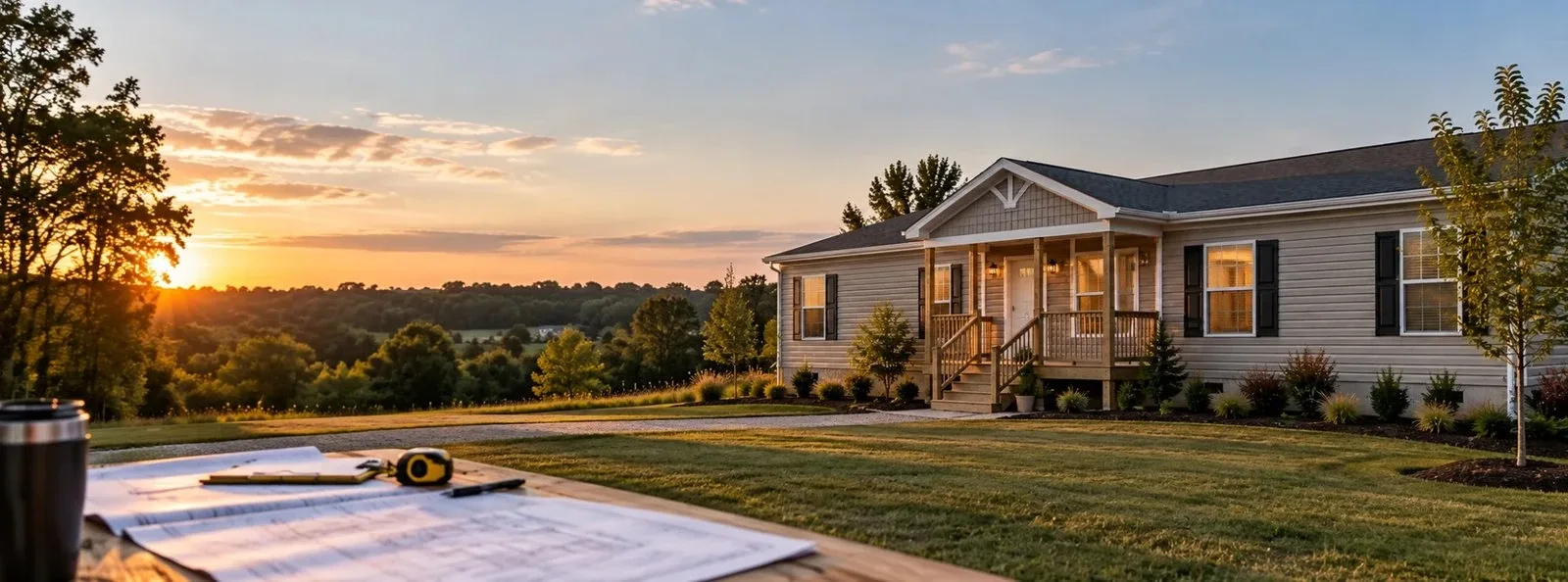
A land-home project is a small development deal. You buy a lot, do the horizontal work (septic or sewer, well or water tap, power, driveway, pad and permanent foundation), then set a new double-wide built and installed to the standards FHA and VA lenders require. The finished house sells to an owner-occupant who buys with an FHA, VA, USDA or conventional mortgage. A land-home package loan finances the whole project: the land, the home, delivery and setup, and the site work.
We lend on these projects through our land-home package loan program, and we also own and operate manufactured housing communities. This guide covers how the deal is structured, where the money goes, what to check before you buy land, and what a typical budget looks like. First project? That is fine. We lend to first-time land-home developers in every state except California, Alaska and Hawaii, and same-day quotes are available.
What is a land-home package?
A land-home package combines three things that are normally financed separately: the land, a new HUD-code manufactured home, and the work to put the home on the land. For a homeowner, the package is usually a 30-year mortgage. For a developer, it is a construction-style bridge loan: it funds the project in stages, runs about 12 months, and is paid off when the finished home sells or is refinanced.
In many rural and exurban markets, a new double-wide on its own land, titled as real property, sells to an owner-occupant at a price well above what it costs to develop. Site-built new construction in the same market often costs far more per square foot. That spread is the opportunity.
Why land-home development is a 2026 story
Federal policy has moved toward manufactured housing as one of the main answers to the shortage of affordable homes:
- White House executive order (March 13, 2026). Executive Order 14394, “Removing Regulatory Barriers to Affordable Home Construction,” directs federal agencies to review rules that restrict manufactured and modular housing because of how it is built, to cut costly energy and water mandates on housing including manufactured homes, and directs the Federal Housing Finance Agency to review its guidelines on chattel lending for manufactured housing.
- The 21st Century ROAD to Housing Act (law since July 11, 2026). Congress removed the requirement that a manufactured home be built on a permanent steel chassis, which HUD says can add up to $10,000 to the cost of a new home, and raised the FHA loan limits for manufactured housing.
- HUD’s Next Generation Manufactured Housing Action Plan (October 7, 2026). HUD’s plan lays out updates to the HUD Code for chassis-free homes, new foundation and installation standards, and multi-section designs.
What this means for a developer: more buyers can finance a manufactured home on land, local barriers are under federal pressure, and home costs should come down as factories adopt the new rules. What it does not change: zoning and siting are still local, HUD’s new chassis-free standards are still being written, and today’s buyer still needs a home that meets current FHA and VA rules. Build to those rules now.
Why investors develop land-home projects
- Buyers have financing. When the home sits on a permanent foundation and is titled with the land as real property, the end buyer can use a regular mortgage, including FHA and VA with little or nothing down. That opens the home to first-time buyers and veterans who cannot find anything site-built in their price range.
- The build is fast. The home is built in a factory while you do the horizontal work. A typical project runs four to eight months from closing to a finished, inspected house, against a year or more for a site-built spec home.
- Costs are known up front. The dealer quotes one price for the home, delivery and setup. Most of the budget risk sits in site work, which you can bid before you close.
- Demand is deep. Shoppers search “land home packages” and “land and home packages near me” thousands of times a month (Semrush, October 2026), and manufactured housing has held value through downturns because it is the cheapest new housing most buyers can get.
This is different from classic mobile home flipping, where an investor buys a used home in a park, renovates it and resells it on leased land. A land-home project creates a new home on its own deeded land, titled as real estate, which is what lets the end buyer use a mortgage and what supports a higher resale price.
The risks are real too: zoning that does not allow the home, a lot that will not perc for septic, a resale value built on site-built comps, and the paperwork that turns a titled vehicle into real estate. We cover each one below.
Example: a land-home project budget
Here is a recent central Florida project, with the borrower’s details removed and the numbers shown at our current 80% of cost. The borrower already owned a cleared lot and planned to do the site work, set a new double-wide and sell it.
| Project budget (uses) | Amount |
|---|---|
| Land (credited at cost plus documented improvements) | $20,000 |
| New manufactured home, including delivery and setup | $72,000 |
| Site work: septic, well, power, foundation, driveway, permits | $40,000 |
| Interest reserve (6 months) | $6,655 |
| Total project cost | $138,655 |
| How it is paid for (sources) | Amount |
|---|---|
| Your land (already owned) | $20,000 |
| Your home deposit, paid to the dealer through title at closing | $7,731 |
| Your 20% | $27,731 |
| Loan: interest reserve | $6,655 |
| Loan: draws for the home balance and site work | $104,269 |
| Loan amount (80% of cost) | $110,924 |
Four things to notice:
- Your 20% goes in once, at the start. Your land and the home deposit make up the first 20% of the project. After closing, the loan pays 100% of the approved budget, so you are not writing a check for your share of every invoice during the build, and your cash is not tied up waiting on draws.
- Land you already own counts. It can be credited toward your 20%, at what you paid plus documented improvements such as clearing and grading. Keep the receipts.
- Fees are paid at closing, not financed. Origination, legal, appraisal and any broker fee sit outside the budget and are paid at closing. Every fee is on your term sheet up front, so there are no surprises at the closing table. On this deal fees were about $11,600, so the borrower’s cash at closing was the $7,731 deposit plus fees and title costs.
- The interest reserve covers your payments during the build. Six months of interest is set aside in the loan and pays your monthly interest while the home is being built, so you are not paying out of pocket before the house can sell or rent.
Does it pencil? Run the exit before you buy the land. Here is the same project with an example sale price:
| Example sale (illustrative) | Amount |
|---|---|
| Sale price, if comps support it | $215,000 |
| Less total project cost | ($138,655) |
| Less loan fees paid at closing | ($11,600) |
| Less selling costs (about 7.5%) | ($16,125) |
| Profit before taxes | about $49,000 |
The sale price is the number everything rests on. Use sold comps for new or nearly new manufactured homes on similar lots, not site-built homes. Appraisers and your buyer’s lender will compare your home to other manufactured homes on land, and so do we.
For what each part of a project typically costs, from the foundation to impact fees, see our land-home package cost breakdown.
Five things to check before you buy the land
Most land-home problems start with the parcel, not the home. These checks take a few weeks and a few hundred dollars, and they save the project. If you are not sure how to read what you find, send it to us and we will look at it with you.
1. Zoning letter
Get a written letter from the county or city confirming a manufactured home is allowed on the parcel. Many jurisdictions ban them in certain districts or set rules on minimum square footage, roof pitch, foundation type or the age of the home. A listing that says “mobile homes allowed” is not enough.
2. Septic and water
If there is no sewer, order a soil test (perc test) and confirm the lot can hold a septic system sized for the bedrooms you plan. Ask whether you need a well, and what the well and septic permits cost locally. Septic is where budgets break most often.
3. Access and delivery
A double-wide arrives as two 14- to 16-foot sections on trucks. Confirm legal road access, turning room, overhead lines and trees. The dealer can do a site check.
4. Flood, easements and deed restrictions
Check the flood zone (it changes foundation and insurance costs) and read the deed and any HOA covenants for restrictions on manufactured homes.
5. Comps that match the product
Pull sold comps for manufactured homes on owned land within a few miles, ideally sold in the last six months, with similar acreage and the same section count. Note days on market. This is the number the whole project rests on.
The title: how a vehicle becomes real estate
This is the step that trips up most first-time land-home projects. We handle it with you and your title company.
A new manufactured home leaves the factory with a Manufacturer’s Certificate of Origin (MCO), the same kind of document a new car has. Until the home is permanently attached to land and that title is retired, the home is personal property, legally separate from the lot. If the MCO is lost or the dealer’s floor-plan lender still has a claim on it, you can end up with a finished house that you cannot sell as real estate.
How we handle it:
- We pay the dealer directly when the home is delivered, in exchange for the original MCO. You never have to front the cost of the home, and the MCO goes straight into the title process instead of sitting in a dealer’s file.
- The home is affixed to the land on a permanent foundation and inspected.
- The title company retires the title so the home and land become one parcel of real property. In Florida this is done under section 319.261 of the Florida Statutes, by filing with the Department of Highway Safety and Motor Vehicles. Other states have their own affidavit of affixation process.
- A holdback is released at the end. We hold back part of the final draw until the certificate of occupancy is issued and the title is retired, so the finished home is ready for a buyer’s lender on day one.
How the money flows during the build
- Closing. You pay for the land (or contribute land you already own), the home deposit to the dealer, and closing costs through the title company. The mortgage is recorded before any work starts. The dealer orders the home.
- Permits. Septic, well, electric and setup permits are pulled before the first draw.
- Site work draws. As each stage passes inspection, we pay the contractor directly, or reimburse you with a paid invoice, a lien waiver and an inspection. You can use your own contractors. Projects typically have four or five draws.
- Home delivery. When the home is on the lot, we pay the dealer the balance and receive the MCO.
- Completion. Utilities are connected, the county signs off, the title is retired, and the holdback is released.
The loan covers the approved budget, so get firm bids for site work and build in a 5% to 10% contingency. If a bid comes in high, call us early, before the work starts, and we will talk through your options. Home prices have also moved quickly this year; see how tariffs have pushed manufactured home costs up. Lock the dealer quote in writing before you close.
Two exits: sell or rent
Sell to an FHA or VA buyer
Your buyer’s lender sets the bar, so build to it from day one. FHA and VA generally require that the home:
- Carries the HUD certification label (built to the HUD Code)
- Sits on a permanent foundation that an engineer certifies to HUD’s Permanent Foundations Guide for Manufactured Housing
- Is titled with the land as real property under state law, on land the buyer owns
- Has never been installed at another site
A double-wide gives you the widest buyer pool: it clears the minimum size rules many FHA and VA lenders add on top of the agency rules, and it comps better against other homes on land. Plan the foundation for the strictest buyer you expect. Retrofitting a foundation after the home is set is expensive.
Rent and refinance
If the rent supports it, lease the finished home and refinance the bridge loan into long-term debt sized on rent, such as a DSCR rental loan. Check the DSCR lender’s manufactured home rules (minimum width, square footage and acreage) before you choose a floor plan. Our guide to how DSCR loans work covers the math.
What to send us for a quote
- Land purchase contract, or the deed if you own the lot
- Dealer quote with the model, size, section count, and what delivery and setup include
- Site work budget with contractor bids
- Zoning letter and soil or perc test (or sewer and water tap availability)
- Survey or parcel map showing access
- Exit plan with manufactured-on-land sales comps, or a rent estimate
- Your entity documents and a short summary of past projects
You do not need every item to start. Send what you have and we will tell you what is missing. Same-day quotes are available.
Frequently asked questions
Can investors get land and home package loans?
Yes, but not from most consumer lenders, whose land-home programs require you to live in the home. Investors use a business-purpose loan to an LLC, such as our land-home package loans, which fund up to 80% of total project cost for non-owner-occupied projects.
Is a land-home loan the same as a chattel loan?
No. A chattel loan finances the home alone as personal property, often on leased land in a community. A land-home loan finances the home and the land together and is secured by a mortgage on the land, with the home becoming part of the real estate once its title is retired.
Can I use an FHA loan for an investment land-home project?
No. FHA loans are for owner-occupants. Your end buyer may use FHA to buy the finished home, which is why the foundation and title need to meet FHA rules, but your construction financing has to come from a business-purpose lender.
Do you lend to first-time land-home developers?
Yes. Many of our land-home borrowers are doing their first project. A solid site work budget, a dealer quote and good comps matter more than a long track record, and we will walk you through each step.
Where do you lend?
In every state except California, Alaska and Hawaii.
Can I use my own contractors?
Yes. We pay your contractors directly as each stage passes inspection, or reimburse you with a paid invoice, a lien waiver and an inspection.
How much cash do I need?
Plan on 20% of the total project cost (land, home, site work and interest reserve), plus loan fees and closing costs. Land you already own can count toward the 20%.
Do you finance used or modular homes?
Our land-home program is for new HUD-code manufactured homes. Modular and site-built homes go through our new construction loans.
How long does a land-home project take?
Plan on four to eight months from closing to a finished, inspected home, depending on permits, septic and the factory’s backlog. Most loans run 12 months to leave room to sell.
Have a land-home deal?
Send us the lot, the dealer quote and your site work numbers, and we will tell you how we would structure it, often the same day. See the full program on our land-home package loans page, or call 813.338.1000.
Requity Lending makes business-purpose loans secured by non-owner-occupied investment property. The example above is illustrative, based on a recent deal with identifying details removed. Rates, terms, fees and leverage are set deal by deal and subject to underwriting. A term sheet is not a commitment to lend.